Food and cooking collocations in English
By: Collocations.org Admin
Date: 14 June 2026
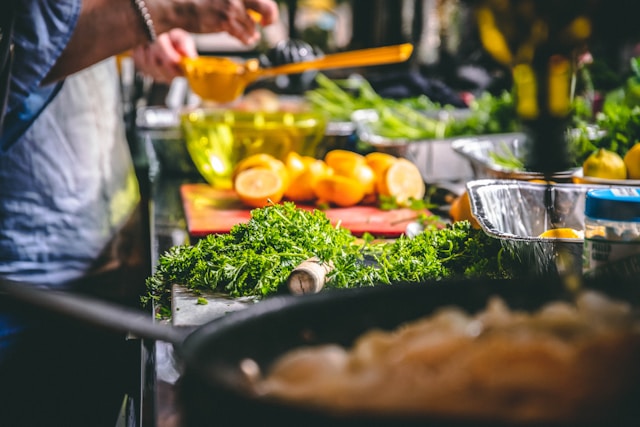
The language of food in English
Food is one of the most universal topics in human conversation, and English has a wonderfully varied vocabulary for talking about it. From the kitchen to the restaurant table, from describing flavours to discussing recipes, food language is full of collocations that learners need to use food-related English naturally and precisely. Many food collocations are also used figuratively, adding to their importance beyond purely culinary contexts.
Food collocations can be grouped into several areas: preparation and cooking, describing taste and texture, eating and dining, and the more figurative uses of food language in everyday English.
Collocations for cooking and preparation
- Prepare a meal, cook a dish, make a recipe, whip up a snack
- Chop vegetables, slice bread, grate cheese, peel potatoes, dice an onion
- Bring to the boil, simmer gently, reduce the sauce, stir continuously
- Preheat the oven, bake at a high temperature, roast until golden
- Season to taste, add a pinch of salt, drizzle with olive oil
Collocations for describing food
- Rich flavour, delicate aroma, subtle taste, overpowering smell
- Crispy texture, tender meat, creamy sauce, flaky pastry, hearty soup
- Freshly baked, lightly seasoned, heavily spiced, perfectly cooked
- Go off, turn rancid, become stale, lose its freshness
- Comfort food, street food, fast food, home-cooked food, seasonal produce
Collocations for eating and dining
- Sit down for a meal, grab a bite to eat, have a snack, skip breakfast
- Eat heartily, pick at your food, wolf something down, savour every bite
- Book a table, order from the menu, ask for the bill, leave a tip
- Try a dish, sample the cuisine, develop a taste for something
- Have a sweet tooth, be a fussy eater, follow a strict diet
Food collocations used figuratively
Food language appears frequently in figurative expressions in English:
- Food for thought: something that makes you think carefully
- The cream of the crop: the best of a group
- Take something with a pinch of salt: be sceptical about something
- A hard nut to crack: a difficult problem or person
- Bite off more than you can chew: take on more than you can handle
Learning food collocations through experience
Cooking shows, food blogs, recipe websites, and restaurant reviews are all rich and enjoyable sources of food collocations in natural use. Because food is such a personal and engaging topic, most learners find it easy to remember food vocabulary that they encounter in contexts they enjoy. Try writing a short description of a meal you love using as many accurate collocations as possible. It is a surprisingly effective vocabulary exercise.